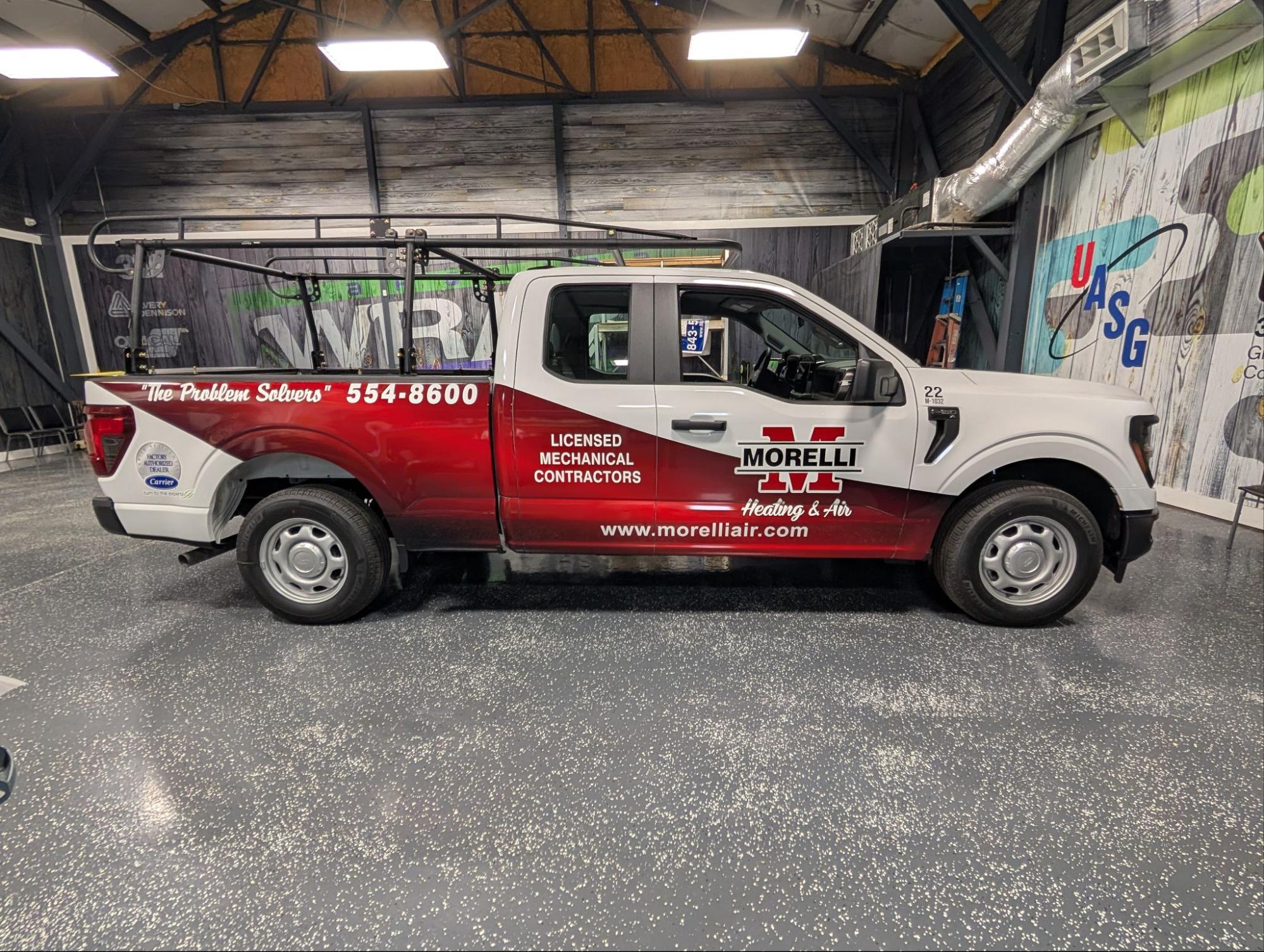
If your trucks are on the road every day, your lettering is not decoration. It is advertising, reputation, and first impression all at once. The reason some graphics stay sharp and professional for years while others bubble, peel, or fade comes down to vinyl chemistry, surface prep, and installation technique.
Professional vinyl work is what turns your vehicles into reliable mobile billboards instead of rolling reminders that corners were cut. At Carolina Wraps, we build every project around how the material will behave in real conditions, not just how it looks on a design proof.
You also have more pressure on your marketing dollars than ever. Your team needs visibility, but you cannot afford downtime for constant reprints or repairs. Cheap film and rushed installs look fine on day one, then start lifting at door handles and corners, which costs time to fix and quietly erodes trust with every customer who sees it.
Investing in the right vinyl system and certified installation reduces that risk, keeps trucks in service, and gives you a cleaner, longer lasting presence everywhere you park or drive.
Vinyl Is A Material Science, Not Just A Sticker
Vinyl is not one generic product. Cast and calendared films behave very differently once they are stretched around curves, rivets, and body lines.
Cast films are engineered to be more dimensionally stable on complex surfaces, while lower grade materials can shrink back over time and expose edges or leave glue lines.
Our job is to match the material to the surface and the use case. We look at how your trucks are built, where the lettering will sit, and how long you plan to keep the graphics on the vehicle.
From there we recommend film and laminate combinations that can handle real fleet work instead of just a short promotion. That material choice is the foundation for everything that follows.
Surface Prep Is Where Most Installs Go Wrong
Even the best vinyl fails if it is applied over a bad surface. Wax, silicone, road film, and failing clear coat all interfere with adhesion. The result is familiar: edges that lift, corners that collect dirt, and panels that start to peel back long before they should.
We take surface prep seriously because it is the step that is hardest to see but easiest to skip. Our installers clean, decontaminate, and inspect every panel before application. If we see paint problems that will affect performance, we talk with you about it instead of covering it up and hoping for the best. That approach protects both your investment and your expectations.
Installation Conditions And Technique Matter
Vinyl does not like extremes. Installing graphics in the wrong temperature range or stretching film too aggressively around tight areas sets up premature failure.
It might look fine as you leave the shop, but over the next weeks and months the material tries to return to its original shape and starts pulling away from recesses and complex curves.
We control the environment and the amount of stretch so the material stays within what the manufacturer recommends. That includes proper use of heat, correct squeegee pressure, and post heating where needed so the film relaxes and locks into place.
Experience with bumpers, mirrors, and door edges shows up years later when those areas stay tight instead of curling.
Design And Vinyl Work Together On The Road
A truck graphic can be perfectly installed and still underperform if the design is not built for real traffic conditions. Fonts that are too thin, colors that lack contrast, or layouts that bury the phone number all make your advertising harder to read at speed.
We combine design and vinyl knowledge so your lettering works at a glance. That means choosing type, color, and layout that stay legible at typical viewing distances and speeds, and making sure the most important information is not split across difficult body lines or hardware.
The science here is simple but often ignored: if people cannot read it quickly, it might as well not be there.
Why Local Search Shoppers Need To Look Past Price
People who search “truck lettering near me” often compare quotes based on price and a few photos. On the surface, one vinyl job can look a lot like another. The difference is usually under the surface, in the film choice, prep work, and installer training that you cannot see in a thumbnail image.
At Carolina Wraps, we are transparent about what materials we use and how we install them. We also bring 3 M-related training and experience into the process, which means we are working within proven guidelines instead of improvising.
That approach is the heart of The Science of Vinyl: Why Professional Installation Matters, and it is why so many of our projects are built to handle years of real use on Charleston area roads.
Planning For The Full Life Cycle, Including Removal
Good vinyl work does not stop on installation day. At some point you will rebrand, sell a vehicle, or update your graphics. If the wrong material was used or the surface was not evaluated first, removal can turn into a headache with torn film, adhesive residue, or even damaged paint.
We plan for removal from the start. That includes honest conversations about how long you intend to keep the graphics, what condition the paint is in now, and how you expect to maintain the vehicles. With that information, we can recommend a system that looks sharp, holds up, and comes off as predictably as possible down the road.
Ready To Put Vinyl Science To Work On Your Fleet?
Quality truck lettering is not about luck. It is about material science, proper prep, controlled conditions, and installers who know how all of that interacts with real vehicles and real weather. You do not have to become a vinyl expert to make a smart decision, you just need a partner who is willing to explain what you are getting and stand behind the process.
If you are tired of guessing based on more results for “truck lettering near me” and want vinyl that works as hard as your trucks do, reach out to us at Carolina Wraps and get a quote.