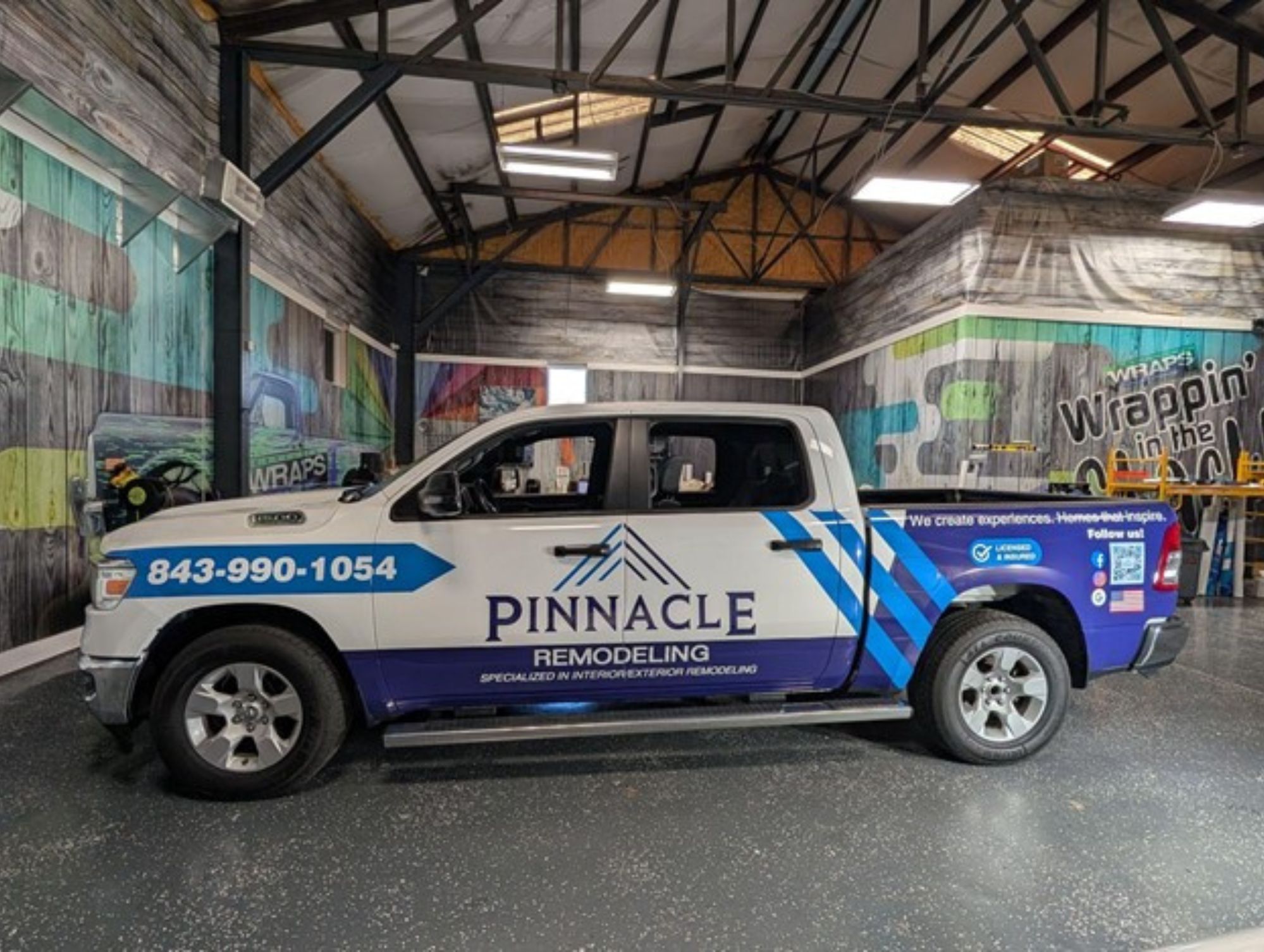
A lot of work truck owners assume more vinyl means more impact. That is not always true. A partial wrap can outperform a full wrap on cost efficiency when the coverage lands on the panels people actually notice in traffic, at stoplights, and while the truck is parked at a jobsite. The payoff comes from smart placement, not automatic full coverage.
The expensive mistake is spreading the budget across low-value areas while the most visible zones stay underused. That usually shows up as a truck that technically has graphics but still does not read clearly from the road. A better wrap plan matches the design to the vehicle type, the route pattern, and the places where attention naturally slows down.
Do you need a full wrap for a work truck?
Not always. Full wraps can make sense for brands that want maximum coverage or a dramatic visual look, but many service businesses get better value from partial wraps that focus on the sides, rear, and other high-visibility surfaces.
What are the best placement zones on a partial work truck wrap?
The strongest zones are usually the side panels and the rear. Side graphics carry the message while the truck is moving or parked broadside at a site.
Rear graphics matter in traffic, at lights, and in driveways where people sit behind the vehicle long enough to actually read it. Those are the areas where brand name, service type, and contact info earn their keep.
Why is the rear of the truck often undervalued?
Because buyers tend to think first about the largest flat side panel. The rear gets overlooked even though it often creates the slowest viewing moment.
Cars behind a truck have more time to read a phone number, URL, or short service message there than they do when the vehicle is passing at speed. If the truck spends time in neighborhoods or on local roads, rear placement can do a lot of quiet work.
How do parked trucks keep advertising after the drive ends?
A parked vehicle can still pull impressions all day. That matters for service trucks at jobsites, delivery vehicles at stops, and box trucks sitting near roads or storefronts.
Carolina Wraps talks about this directly with box trucks, pointing out that they offer three sides of mobile advertising space and can keep working for the brand even while parked. That is a useful reminder that wrap ROI is not limited to miles driven.
How should vehicle type change the wrap layout?
Different vehicles create different visibility patterns. A pickup truck may rely more on doors, bed sides, and the tailgate. A van gives you broad side real estate. A box truck creates large, uninterrupted panels that can handle bigger messaging.
A trailer adds long side exposure but may need more restraint to stay readable. The best layout follows the shape of the vehicle instead of forcing the same template onto every unit.
What should go on the side panels of a work truck?
The side panels should carry the clearest version of the brand. Most businesses do best with a clean logo, a short service identifier, and one contact path. Too much text turns valuable space into clutter. Carolina Wraps’ own design guidance says text should be easy to read from a distance, kept minimal, and sized for real-world readability, not just screen approval.
What should go on the rear of a work truck?
The rear is a better place for direct response details. A phone number, website, or simple call to action can work there because the viewing moment is slower. This is also the zone where some businesses realize they do not need a full wrap at all.
Someone searching for “car vinyl wrap near me” is often trying to solve a visibility problem with local help, and rear placement is one of the first places worth evaluating before paying for broader coverage.
How much coverage looks professional without looking overdone?
Enough to feel intentional. That is the line. A partial wrap should look designed, not pieced together. Spot graphics can work for tight budgets, but there is a point where too little coverage starts to feel like disconnected decals instead of a unified vehicle brand.
A good wrap shop closes that gap with layout, scale, and panel selection rather than simply selling more material.
How long does a partial wrap installation take?
That depends on the vehicle and design complexity, but Carolina Wraps says simple installs can sometimes be completed in one day, while more involved jobs may take two to five days.
That matters for working fleets because downtime is part of the cost. Fast, well-planned installs are not just convenient. They protect operations.
Final thoughts
The smartest wrap decision is rarely about covering every inch of the truck. It is about choosing coverage that gets seen, gets read, and fits the way the vehicle is actually used.
That is why many businesses looking for “car vinyl wrap near me” are better served by a partial wrap with strong placement than a full wrap with wasted coverage. If you want a work truck wrap that looks professional and uses the right panels instead of just more panels, contact us at Carolina Wraps.
1 Comment. Leave new
[…] box truck graphics fail this test, and they fail for a reason that has nothing to do with print quality. They were […]